O! Hole! - Eating Game
- 4.7
- Rating
- 100.00K
- Installs
- Free
- Price

 Analysis by App-foxy
O! Hole! - Eating Game is the kind of casual game I open when I want something immediate, colorful, and easy to understand without committing to a long session. I guide a black hole around a compact play area, consume objects, and gradually become capable of swallowing larger things. The idea is simple, but the satisfaction comes from watching a small opening turn into a much more powerful force.
My first impression was that the game understands its own purpose. It does not ask me to learn a complicated control scheme or follow a dense story before playing. The central action is visible almost at once: move, line up an object, eat it, grow, and use that growth to reach the next group of targets. That makes it a natural fit for short breaks, especially when I want a game that starts quickly and gives me a clear goal.
Developed by SayGames Ltd, this free casual game has a 4.7 average from around 9K ratings, with more than 100K installs. Its age guidance is Everyone 10+, and it runs on Android 8.0 or later. The current version is 1.1.22. Those details matter if I am choosing something for a family device or an older phone, although the age recommendation is still worth checking against the player’s situation.
You May Also Like

 AccuWeather: Weather Radar
AccuWeather Review: A Quick, Clear Forecast for Everyday Decisions
For everyday plans, the best forecast is the one you can understand quickly. AccuWeather makes rain timing, radar, and local conditions easy to act on, with a few trade-offs.

 Hill Climb Racing
Why Hill Climb Racing Still Turns Crashes Into One More Run
A tiny car, a bumpy hill and one more upgrade: Hill Climb Racing keeps resurfacing because its simple chaos makes every near-miss feel personal.

 AliExpress - Shopping App
AliExpress Makes Global Shopping Feel Personal, but Shoppers Bear the Risk
AliExpress turns a global marketplace into a pocket-sized discovery engine. Its reach is useful, its shopping loop compelling, and its trade-offs easy to miss.

 Lords Mobile: Kingdom Wars
Lords Mobile Is a Kingdom-Building Routine, Not a Quick Match
A case-by-case verdict on the building, battles, device demands, and social commitments that make Lords Mobile rewarding for some players and exhausting for others.

 PDF Scanner app - TapScanner
TapScanner Makes Paperwork Easier to Capture, Check, and Share
TapScanner makes scanning with a phone feel less like a rescue operation and more like a dependable step in getting work done. Its capture tools are useful, though not flawless.

 Block Blast!
 Shows How Much a Puzzle Game Can Leave Out
A quiet grid game shows why puzzle players increasingly value instant clarity, repeatable skill and low-pressure play—and where the genre still needs to catch up.
More From Our News Desk
View All News


How the visual world turns a simple idea into a playable mood
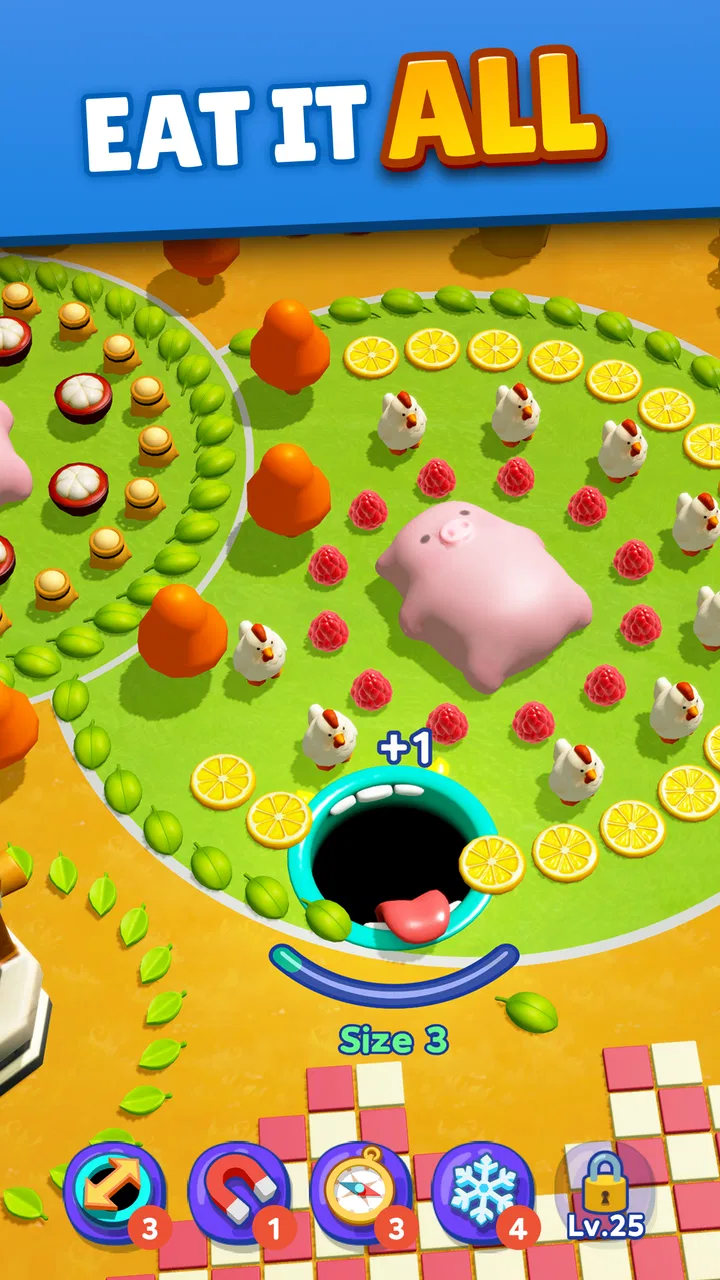
I find the visual world most effective when it makes the black hole’s limits easy to read: nearby objects invite action, while larger ones encourage me to build up first. That clarity gives the playful destruction a little structure, so the setting feels like more than decoration. It also makes a quick scan of the area worthwhile before I start moving.
A clear visual language built around the hole
The black hole is not treated as an abstract menu icon or a technical gimmick. It is the character, the tool, and the progress indicator at the same time. Every object on the ground becomes part of a visual conversation: some are immediately available, while others suggest that I need to grow before they can be consumed. I like that the game communicates advancement through what I can physically eat rather than relying only on numbers or text.
That choice gives the setting a playful logic. I do not need a long explanation to understand why a larger object is temporarily out of reach. The hole’s size tells me what is possible. As a result, the environments feel less like static backgrounds and more like small puzzles arranged around appetite and positioning.
The art direction also supports the game’s light tone. A black hole could easily make the presentation feel ominous, but here the concept is handled as cartoonish destruction rather than serious science fiction. The contrast is useful: the central image is visually strong, while the overall mood stays approachable enough for a casual audience.
Why the setting works best when I stop rushing
The most enjoyable moments come when I look at the whole area before moving. Instead of immediately chasing the nearest object, I can scan for clusters, narrow routes, and larger targets that might become useful after a little progress. This creates a modest layer of planning inside what first appears to be pure movement.
One practical habit helped me play more cleanly: I try to finish nearby groups before crossing the area. That reduces unnecessary backtracking and makes the growth curve feel more deliberate. It is not a deep strategy system, but it changes the experience from random sweeping into controlled collection.
The visual design is especially effective because it keeps the important information readable. The hole is the focus, the edible objects are easy to identify, and the environment does not need to compete with the action. For a game intended to be understood quickly, that restraint is more valuable than elaborate decoration would be.
Where the presentation may feel limited
Players looking for a detailed world, character development, or a strong narrative setting should adjust their expectations. The atmosphere is created through color, object placement, and the absurdity of swallowing the environment, not through a story that unfolds between stages. I found that refreshing for short play, but it also means the game’s appeal depends heavily on whether I enjoy repeating its central action.
This is not a drawback for everyone. If I want a focused arcade-style distraction, the lack of narrative keeps the game moving. If I need a world to explore or characters to become attached to, a story-led casual game will probably offer more lasting variety.
Sound as a guide to the game’s rhythm
The sound design works best as a companion to the eating action. Each successful swallow needs to feel like a small reward, and the audio helps mark those moments so the sequence does not become visually flat. The result is a rhythm that I can feel even when I am not thinking about strategy: move toward a target, absorb it, reposition, and continue.
I would describe the mood as playful rather than relaxing in the traditional sense. The game has a satisfying sense of momentum, but the repeated consumption sounds and movement cues keep my attention active. That makes it suitable for a quick mental reset, though I would not necessarily leave the audio at full volume during a quiet commute or shared room.
One useful approach is to treat sound as feedback rather than decoration. When I pay attention to the change between ordinary movement and successful eating, I become more aware of whether I am actually aligned with an object. That is a small advantage, but it helps during crowded sections where the visual action can become busy.
How pacing keeps the loop approachable
The pacing is built around visible progress rather than long-term planning. I begin with limited reach, consume what is available, and use the resulting increase in size to open up more possibilities. This structure gives nearly every short session a sense of direction, even when I only play for a few minutes.
I appreciate that the game does not require me to remember a complicated build or manage several resources at once. My attention stays on movement and target selection. The trade-off is that the experience can feel repetitive if I play for too long in one sitting. The loop is strongest in bursts, where the simple rhythm remains satisfying instead of becoming routine.
For an everyday example, I can imagine opening it while waiting for an appointment. I do not need to set aside a full evening or remember a storyline from the previous session. I can play a short round, focus on clearing the nearby objects efficiently, and close the game without feeling that I have abandoned a complicated task. That convenience is one of its clearest strengths.
The mechanics fit the visual idea
The central mechanic and the presentation support each other unusually well for such a small concept. The black hole’s growth is both a gameplay change and an atmospheric change. At the beginning, the world feels full of obstacles and unreachable objects. Later, the same environment feels more open because my character has become capable of consuming more of it.
That connection prevents the progression from feeling like an arbitrary upgrade bar. Even without a detailed explanation, I understand why advancement matters. I am not simply collecting points to make a number rise; I am expanding the range of actions available to me.
Movement is therefore more important than reflex speed alone. I need to approach objects from useful angles, avoid wasting time on targets that are currently too large, and keep my route compact. The best runs feel tidy. I am not frantically circling the area; I am arranging the order in which the environment disappears.
Small decisions that make the loop more satisfying
A less obvious strength is the way target order affects the feel of a round. If I chase the most tempting large object too early, I can spend time moving without making progress. Clearing smaller, accessible items first usually creates a smoother route and makes the later targets feel earned. This is a simple rule, but it gives the game more texture than the store summary suggests.
I also find it useful to avoid unnecessary edge movement. When the hole reaches a boundary or awkward corner, repositioning can interrupt the rhythm. Staying near the center of an active cluster often lets me chain several successful actions without long empty stretches. This is not a formal advanced technique, but it makes the game feel faster and more controlled.
Another trade-off is precision versus speed. Moving quickly can make a session feel energetic, yet careless movement may leave an object partially misaligned and force a correction. I get better results when I use short, intentional movements around dense groups, then make broader moves only after the immediate area is clear.
Who will enjoy it, and who should look elsewhere
I would recommend O! Hole! - Eating Game to players who enjoy casual arcade loops, visible progression, and games that explain themselves through action. It is particularly suitable for people who like satisfying cleanup mechanics: the pleasure comes from watching a cluttered space become manageable as the hole grows.
It can also work for someone who usually avoids games because they seem too demanding. There is no need to learn a large collection of controls before the main idea makes sense. The player can begin with movement and gradually develop better habits around positioning and order.
I would be more cautious about recommending it to anyone seeking deep strategy, competitive complexity, or a substantial narrative. The game’s charm comes from refinement of one central idea, not from a large collection of systems. Players who prefer puzzle games with several solution paths may find the decision-making too light, while fans of long role-playing adventures will likely want more world-building.
Free to start, with purchases to consider
The game is free to download, which makes it easy to try without an upfront purchase. It includes in-app purchases ranging from $0.99 to $99.99 per item. I would keep that range in mind before handing the device to a younger player, particularly if purchase controls are not already configured on the phone or tablet.
For my own use, the sensible approach is to treat the free entry as a trial of the core loop. If swallowing objects and growing the hole feels satisfying after several short sessions, the game has done its job. If the repetition is already wearing thin, spending more will not change the fundamental reason I am losing interest. The purchases should be considered in relation to convenience, not as a substitute for variety.
The Everyone 10+ rating also suggests that it is aimed at a broad audience while still deserving a little parental awareness. The concept is cartoonish, but caregivers should still review the purchase settings and decide whether the game’s interaction style suits the child using it.
How it compares with other casual choices
Compared with a traditional match-three game, this title is more physical and spatial. I am not waiting for a board to resolve after selecting a combination; I am actively steering the hole through the environment. That makes it feel more immediate, but it also means the quality of a session depends more on movement and route choice than on discovering a clever tile pattern.
Compared with an endless runner, it is less focused on constant forward motion. I have room to inspect the area and choose what to consume next. That makes it friendlier when I want control rather than pressure, although it may feel less exciting to players who enjoy rapid obstacles and strict timing.
Compared with a conventional idle game, the progress is more hands-on. I cannot simply watch numbers rise in the background; I need to guide the hole and make the collection happen. The benefit is stronger moment-to-moment involvement. The cost is that the game gives me less value if I want something completely passive.
Questions I would answer before installing
If I were deciding whether to install it, I would first ask whether the game works for short sessions. In my experience, yes: the clear objective and compact action make it easy to play briefly. I would not choose it specifically for long uninterrupted sessions unless I already knew I enjoyed repeating the same growth-and-consumption loop.
I would also ask whether it is suitable for an older Android device. The listed minimum is Android 8.0, so anyone below that requirement should check compatibility before planning around it. On a supported device, the game’s clear visual structure should be easier to follow than a crowded strategy title, though actual comfort will still depend on the device and the player’s control preference.
Another important question is whether the game needs an internet connection. I would check the behavior directly on the device before relying on it for travel or offline play, rather than assuming that a simple casual design guarantees offline access. That is especially relevant if I am choosing it for a flight, a child’s tablet, or an area with unreliable service.
Finally, I would ask whether the purchase model changes the basic experience. The core appeal remains the act of moving, eating, and growing, so I would judge the game first on that loop. The listed purchase range means I would review any optional offer carefully and use device-level purchase protections when sharing the game with someone else.
The atmosphere holds together because every part serves the same idea
What stays with me is the consistency between the art direction, sound, setting, and mechanics. The black hole is visually unmistakable, the objects provide readable goals, the audio reinforces each successful action, and the progression changes what the environment means. Nothing needs to be overly complicated because the presentation keeps pointing back to the same playful fantasy: start small, consume the world around you, and become capable of taking on more.
That coherence does not remove the game’s limits. The lack of a deeper narrative may disappoint players who need story, and the repeated loop may lose its impact during extended sessions. The free-to-start model also deserves sensible purchase controls. Still, those limitations are easy to understand because the game is honest about its focus through its design.
My final view is favorable, especially for short, low-pressure play. I would recommend it to a friend who wants a colorful casual distraction with a little more control and spatial judgment than a purely passive game. The best way to enjoy it is in compact sessions, using careful target order instead of rushing toward every large object. If that kind of tidy, tactile progression sounds appealing, O! Hole! - Eating Game is worth trying; if you need a complex world or a constantly changing challenge, another casual genre will be a better match.
FAQs for O! Hole! - Eating Game
01What is O! Hole! - Eating Game, and how is it played?
O! Hole! - Eating Game is a casual arcade game built around controlling a growing hole that moves across different environments and swallows objects. The main objective is to eat as many suitable items as possible before the level ends, increase the hole’s size, and clear larger objects as your progress improves. Its simple controls make it easy to start playing immediately.
02Is O! Hole! - Eating Game free to download and play?
The game is generally available to download at no initial cost, allowing players to try its core gameplay without purchasing it first. However, free mobile games may include optional advertisements, in-app purchases, or both. These extras can sometimes provide cosmetic content, bonuses, or other conveniences, so it is worth checking the store listing and purchase settings before downloading.
03Does O! Hole! - Eating Game require an internet connection?
The basic arcade levels can typically be enjoyed without a constant internet connection, which makes the game suitable for short sessions while traveling or when mobile data is unavailable. Nevertheless, certain features may depend on connectivity, including advertisements, online rewards, analytics, updates, or promotional content. Availability can vary according to the device and the version installed.
04Is O! Hole! - Eating Game suitable for children?
O! Hole! - Eating Game uses colorful visuals, straightforward objectives, and non-complex controls, making it accessible to a broad audience, including younger players. Parents should still review the age rating, advertising behavior, and in-app purchase options on the relevant app store. If children use the device, enabling purchase restrictions is recommended to prevent accidental transactions.
05What should I know about the controls, progression, and advertisements?
The game is designed for quick, casual play, usually relying on touch or swipe movement to guide the hole around each stage. Progression focuses on eating objects, growing larger, and completing level objectives rather than learning complicated mechanics. Depending on the version, advertisements may appear between rounds or after completing challenges, while optional rewards can encourage players to watch them.
Pros
- Simple one-touch controls make it easy to start playing immediately.
- Short levels are ideal for quick sessions during breaks or while traveling.
- Increasing hole size creates a satisfying sense of progression.
- Bright visuals and playful effects give the game a cheerful atmosphere.
- Offline play lets you enjoy many levels without a constant internet connection.
Cons
- Gameplay can feel repetitive after extended sessions.
- Later levels may rely more on timing than strategy.
- Ads may interrupt the experience between levels.
- Limited mechanics offer little variety beyond eating objects.
- Progress could feel slow for players seeking faster rewards.

O! Hole! - Eating Game
Gallery